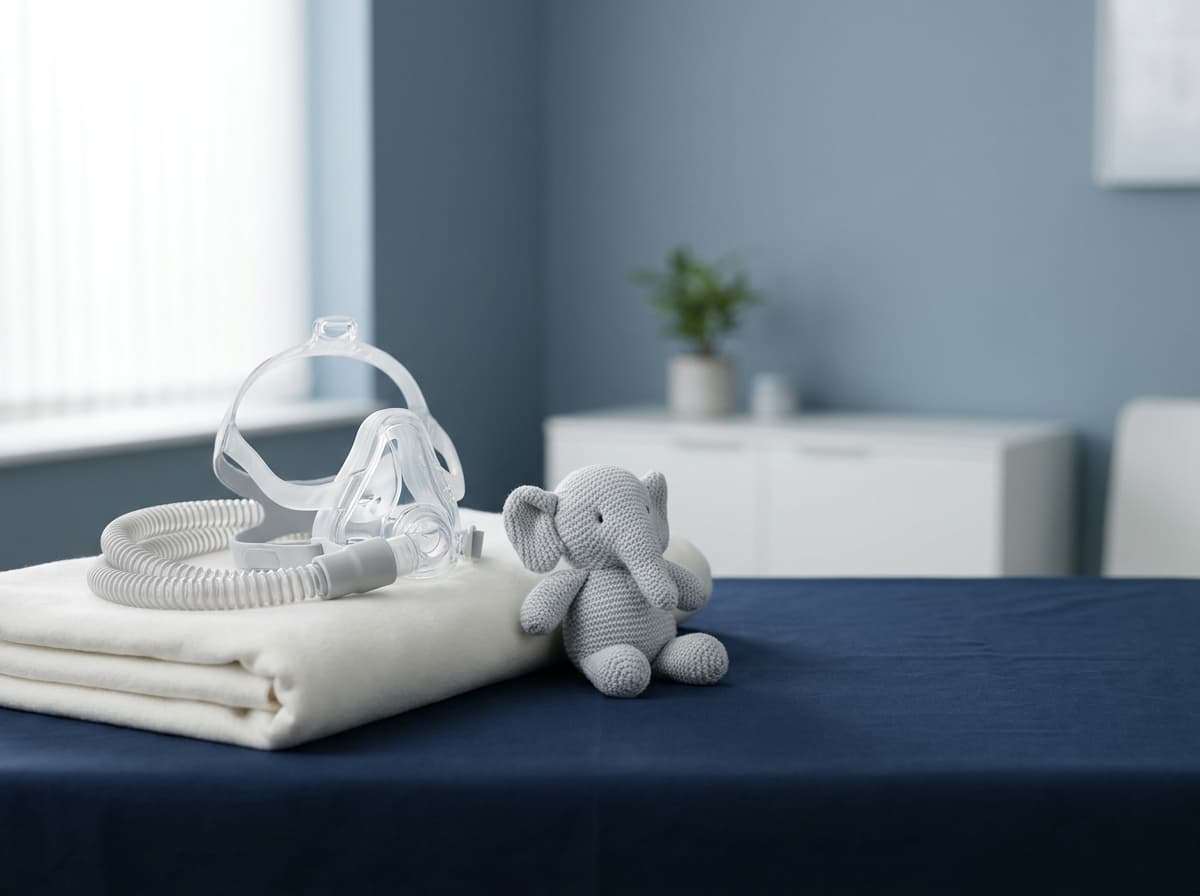
Surgical management of obstructive sleep apnoea is considered for patients who cannot tolerate CPAP therapy, following formal sleep study and airway assessment. Paediatric airway care is provided at Netcare Mulbarton Hospital, and complex adult airway cases at Netcare Milpark Hospital.
Obstructive sleep apnoea
Obstructive sleep apnoea occurs when the upper airway repeatedly narrows or collapses during sleep. Untreated moderate to severe sleep apnoea is associated with daytime sleepiness and increased cardiovascular risk.
Continuous positive airway pressure (CPAP) is the first-line treatment. Surgery is considered for patients who are unable to tolerate CPAP, or in whom a specific anatomical obstruction has been identified.
Establishing surgical candidacy
A formal sleep study (polysomnography or a validated home study) is required before any surgical decision. Drug-induced sleep endoscopy may be used to identify the level and pattern of airway collapse, which guides the choice of procedure.
Surgery is not suitable for every patient, and outcomes vary. Weight management and positional therapy are often part of the overall plan.
- Formal sleep study confirming the diagnosis and severity
- Documented CPAP trial and reasons for intolerance
- Examination of the nose, palate, tongue base and larynx
- Body mass index and relevant comorbidities
Paediatric airway
In children, enlarged tonsils and adenoids are the most common cause of obstructed breathing during sleep. Snoring with pauses in breathing, restless sleep and daytime behavioural changes warrant assessment. Paediatric airway care is provided at Netcare Mulbarton Hospital.
Treatments in this area
- Uvulopalatopharyngoplasty (UPPP) and palatal surgery
- Drug-induced sleep endoscopy (DISE)
- Adenotonsillectomy
- Laryngotracheal reconstruction
- Tracheostomy
Your care team may include: ENT and airway surgery, Sleep medicine, Paediatric anaesthesia and paediatric ward (Netcare Mulbarton), Adult intensive care (Netcare Milpark).