Skip to content

For patients travelling from Zimbabwe

Sinus Surgery & Gland-Sparing Sialendoscopy for patients in Zimbabwe

A nose that's always blocked, pressure in your face, a lost sense of smell, or a gland under your jaw that swells when you eat. Both are common and there are several treatment options. Minimally invasive techniques are used where clinically appropriate, although all surgery carries risks. If you live in Zimbabwe, your own doctor can refer you, and the rooms help you plan travel to Johannesburg for an in-person consultation. Some Zimbabwean funders may authorise treatment in Johannesburg. On request, the practice provides the clinical motivation and coding that funders ask for.

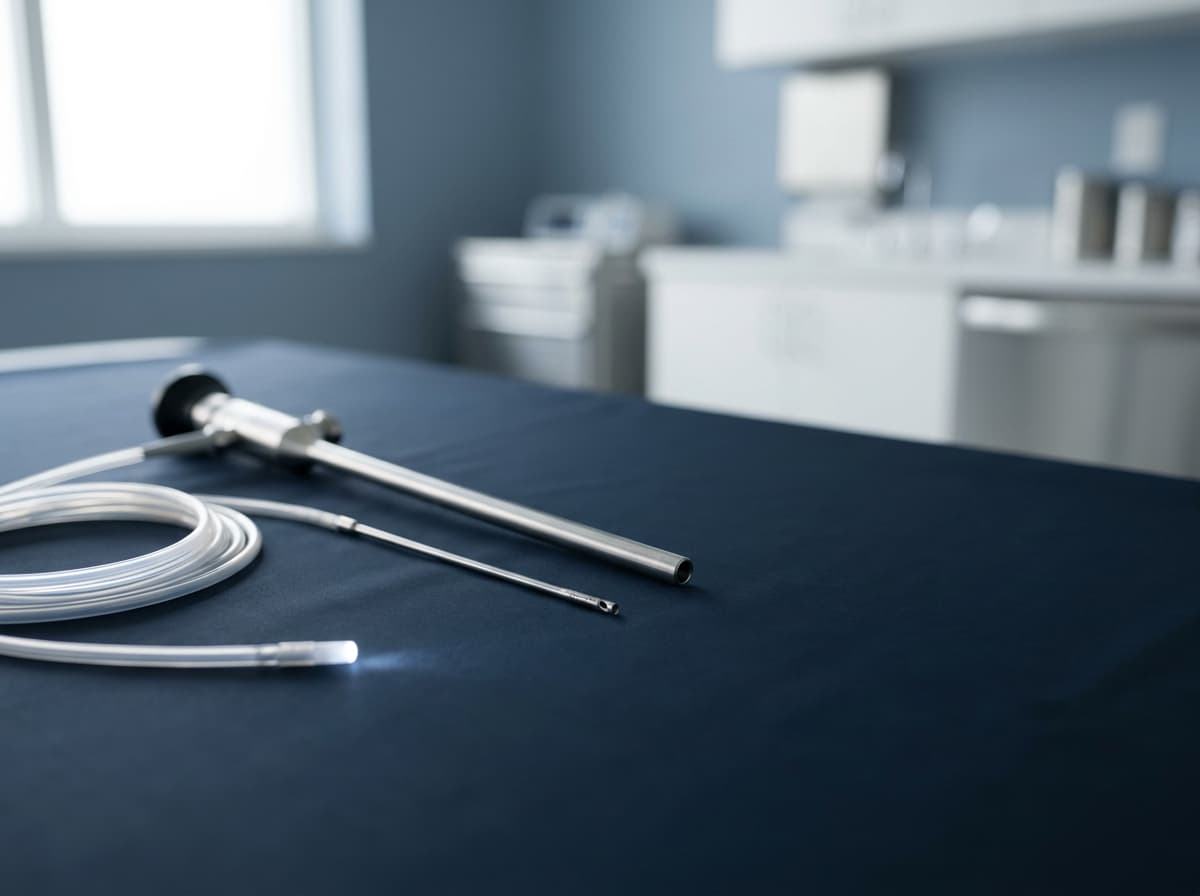
Illustrative image: Sinus endoscope and miniature sialendoscope laid out on a navy surgical drapeIllustrative image

Medical aid & funders

Some Zimbabwean funders may authorise treatment in Johannesburg. On request, the practice provides the clinical motivation and coding that funders ask for.

  • Cimas Health Group

    Cimas may consider referral to Johannesburg, subject to its own pre-authorisation process and your benefit option. Confirm cover with Cimas directly.

  • Other Zimbabwean medical aid societies

    Confirm cross-border cover and required documentation with your fund before travel.

Travel & arrival

Departing from
Robert Gabriel Mugabe International Airport, Harare
Arriving at
O.R. Tambo International Airport or Lanseria International Airport
Hospital
Netcare Milpark Hospital, Parktown West (approx. 45 minutes by road from O.R. Tambo; 35 minutes from Lanseria)

Scheduled flights connect Harare and Bulawayo with Johannesburg. Road travel is via the Beitbridge border post.

Urgent transfers and air ambulance coordination

Your records & POPIA

Sending medical records from Zimbabwe to a practice in South Africa is a cross-border transfer of personal information, which may also be regulated by the data protection law of Zimbabwe. The secure referral portal explains which information is transferred, and where it is processed, and asks for explicit consent before anything is submitted.

  1. 01 Your doctor uploads the referral and imaging
  2. 02 Travel planning call (logistics only)
  3. 03 Funder documents supplied on request
  4. 04 Consultation about sinus surgery & gland-sparing sialendoscopy in person in Johannesburg
Start a secure referral

Dr Nadir Kana, practising at Netcare Milpark, has a clinical and research interest in sialendoscopy for sialolithiasis and obstructive sialadenitis. In suitable patients, semi-rigid endoscopes are used to retrieve salivary stones and treat duct strictures through the mouth, which may avoid the external incision needed for gland excision.

Chronic rhinosinusitis and nasal polyps

Chronic rhinosinusitis is diagnosed when nasal obstruction, discharge, facial pressure or reduced sense of smell persist for more than twelve weeks, with supporting endoscopic or CT findings. Initial treatment is medical; surgery is considered when symptoms persist despite an appropriate course of treatment.

Functional endoscopic sinus surgery (FESS) is performed through the nostrils. The aim is to open the natural drainage pathways of the sinuses and remove polyps, while preserving normal mucosa.

What is sialendoscopy?

Sialendoscopy is the endoscopic examination and treatment of the salivary ducts using miniature semi-rigid endoscopes introduced through the natural duct opening inside the mouth. It allows direct visualisation of stones, strictures and mucous plugs.

Small stones can be retrieved with baskets or graspers; larger stones may require a combined approach with a small incision inside the mouth. Strictures can be dilated under direct vision.

Gland preservation compared with gland excision

Historically, recurrent obstruction of the submandibular or parotid gland was frequently treated by removing the entire gland (sialadenectomy). Gland excision requires an external neck or facial incision and carries risks to the facial, lingual and hypoglossal nerves.

In appropriately selected patients, sialendoscopy offers a gland-preserving alternative that avoids an external scar. Not every patient is suitable, and some will still require gland excision; the options are discussed on the basis of the imaging and endoscopic findings.

  • Performed through the natural duct opening in the mouth
  • Usually no external skin incision
  • Aims to preserve the salivary gland and its function
  • Often performed as day-case surgery

Treatments in this area

  • Functional endoscopic sinus surgery (FESS)
  • Frontal sinus surgery including Draf procedures
  • Balloon sinuplasty
  • Diagnostic and interventional sialendoscopy
  • Sialolithiasis and ductal stenosis management

Your care team may include: ENT and head & neck surgery, Radiology, Anaesthesia (day-case).

For referring doctors

When to refer, and what to send

Send a secure referral

The referral form asks for consent to records being sent from Zimbabwe to South Africa and processed on servers outside South Africa (POPIA Section 72). The data protection law of Zimbabwe may also apply.

Referral criteria

  • Recurrent peri-prandial swelling or pain of the submandibular or parotid gland
  • Radiologically confirmed salivary calculus
  • Recurrent sialadenitis without an identified cause
  • Chronic rhinosinusitis with or without polyps not responding to maximal medical therapy

Helpful work-up before consultation

  • Ultrasound of the salivary glands, or CT where a calculus is suspected
  • Non-contrast CT of the paranasal sinuses for chronic rhinosinusitis
  • Summary of prior medical treatment and duration

Common questions

Things people often ask

Can't see your question here? The rooms are happy to help.

Contact the rooms
Can a salivary gland stone be removed without removing the gland?

In many cases, yes. Sialendoscopy allows stones to be retrieved through the natural duct opening in the mouth, preserving the gland. Suitability depends on the size, number and position of the stones, which is assessed on imaging.

Where is sialendoscopy performed in this practice?

In this practice, diagnostic and interventional sialendoscopy is performed at Netcare Milpark Hospital, Johannesburg. Whether it is suitable for you is decided after a consultation and imaging.

How long is recovery after FESS?

Most patients return to office-based work within one to two weeks. Nasal rinses and follow-up endoscopic cleaning are part of the recovery process. Individual recovery times vary.

Medically reviewed by Dr Nadir Kana, Otorhinolaryngology (ENT) and Head & Neck Surgery. Last reviewed .